What I think
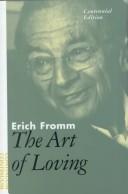
This book is very powerful. It reframes love as a practice, which I think is a big shift for many people.
Many of us think of love as this fixed thing. Oh, I love you or I don’t love you. But in reality, love, like many other things, is a practice.
It’s one of my favorite books. It’s fascinating reading it as a follow-on to Escape from Freedom, too.
It also inspired my thinking on generosity, which I write about in The Pathless Path. You can’t just be a generous person. You can’t just love someone. You actually have to practice it and embody it at a deeper level. This book really brings that alive.
In The Pathless Path, I described generosity as “not merely a trait, but a skill that needs to be practiced.” In 2020, I called The Art of Loving one of my favorite books and wrote that family had taught me love takes intention, practice, and commitment.
The book also talks about the idea of creative union as a way to transcend and experience love, which I thought was incredibly powerful. I wrote about this in The Pathless Path too. I was finding that the act of creation was the reward itself, and I would have thought Fromm’s idea “completely absurd if I had not felt the depths of my connection to the world in those months.”
What the book is about
Fromm begins with a question: is love an art we can learn, or a pleasant experience we hope to be lucky enough to have?
He argues for taking love seriously as a capacity that requires attention and practice. We put enormous effort into becoming successful, making money, and earning recognition, and much less into learning how to love.
The book also explores why we want love. Fromm sees the experience of being separate from other people as a central human difficulty. Conformity offers one response: become like everyone else and feel less alone. Mature love offers connection while preserving the individuality of the people involved.
Highlights
Love is an art
IS LOVE AN ART? Then it requires knowledge and effort. Or is love a pleasant sensation, which to experience is a matter of chance, something one “falls into” if one is lucky?
in spite of the deep-seated craving for love, almost everything else is considered to be more important than love: success, prestige, money, power—almost all our energy is used for the learning of how to achieve these aims, and almost none to learn the art of loving.
To be fully awake is the condition for not being bored, or being boring—and indeed, not to be bored or boring is one of the main conditions for loving.
Separateness and conformity
The experience of separateness arouses anxiety; it is, indeed, the source of all anxiety.
If I am like everybody else, if I have no feelings or thoughts which make me different, if I conform in custom, dress, ideas, to the pattern of the group, I am saved; saved from the frightening experience of aloneness.
But actually, people want to conform to a much higher degree than they are forced to conform, at least in the Western democracies.
Mature love
In contrast to symbiotic union, mature love is union under the condition of preserving one’s integrity, one’s individuality.
In love the paradox occurs that two beings become one and yet remain two.
If a person loves only one other person and is indifferent to the rest of his fellow men, his love is not love but a symbiotic attachment, or an enlarged egotism.
Work and activity
Take for instance a man driven to incessant work by a sense of deep insecurity and loneliness; or another one driven by ambition, or greed for money. In all these cases the person is the slave of a passion, and his activity is in reality a “passivity” because he is driven
One loves that for which one labors, and one labors for that which one loves.
To be “responsible” means to be able and ready to “respond.”
In any number of articles on happy marriage, the ideal described is that of the smoothly functioning team. This description is not too different from the idea of a smoothly functioning employee
Creative work
In any kind of creative work, the creating person unites himself with his material, which represents the world outside of himself.
Work for profit doesn’t even seem to satisfy the soul. We need connection to something bigger. The creative union stuff resonates.
This, however, holds true only for productive work, for work in which I plan, produce, see the result of my work.
Faith
The faith in others has its culmination in faith in mankind.
The presence of this faith makes the difference between education and manipulation.
To have faith requires courage, the ability to take a risk, the readiness even to accept pain and disappointment. Whoever insists on safety and security as primary conditions of life cannot have faith