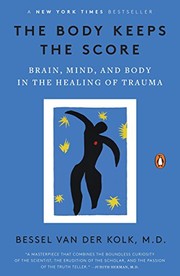
I recently finished The Body Keeps The Score, which talks about the growing evidence of the effects of trauma on the body and one’s ability to thrive or not in life. We typically think about trauma in terms of people returning from war facing PTSD, but the book makes it clear that many people are carrying enormous pain and trauma around them in hidden and plain sight.
As I rebounded from a two-year battle with health challenges in 2015 much of this trauma became visible to me. I was able to listen and pause more while observing that almost everyone is struggling with something.
If you’ve ever bounced back from a rough patch in life you probably know what I’m talking about.
One of the best measures of the impact of trauma is the Adverse Childhood Experiences survey, which measures responses to 10 questions measuring abuse, stress, and neglect. Numerous studies have found that women and minorities have a much higher incidence of these events and this disparity is probably one of the most important underlying realities that we need to grapple with.
When I first looked at the survey, I realize how profoundly lucky I am. I didn’t face any adverse events, which is like starting life on third base, if not halfway home as an adult. This is the greatest gift I have ever been given.
Yet in the US, we look at success through a lens of who has economic resources which blinds us from the millions across all races, ages, identities and wealth that are suffering and increasingly feeling angry, alienated and disconnected.
The Body Keeps The Score showed that people that suffer trauma are robbed of the true gift of life: the freedom of feeling alive:
Trauma compromises the brain area that communicates the physical, embodied feeling of being alive.
My summary in my notes at the time: trauma is likely way more widespread than people realize and has a dramatic and measurable impact on people’s physiology and their mindset towards life. However, the model of medicine that emerged around drugs in the 1950s-1970s stopped us from really making any progress to treat it. Nonetheless, there are many promising ways to think and process trauma.
Highlights
Trauma has shut down their inner compass and robbed them of the imagination they need to create something better.
If the people whom you naturally turn to for care and protection terrify or reject you, you learn to shut down and to ignore what you feel.
During disasters young children usually take their cues from their parents. As long as their caregivers remain calm and responsive to their needs, they often survive terrible incidents without serious psychological scars.
Understanding why you feel a certain way does not change how you feel. But it can keep you from surrendering to intense reactions (for example, assaulting a boss who reminds you of a perpetrator, breaking up with a lover at your first disagreement, or jumping into the arms of a stranger). However, the more frazzled we are, the more our rational brains take a backseat to our emotions.
Talking about painful events doesn’t necessarily establish community—often quite the contrary. Families and organizations may reject members who air the dirty laundry; friends and family can lose patience with people who get stuck in their grief or hurt. This is one reason why trauma victims often withdraw and why their stories become rote narratives, edited into a form least likely to provoke rejection.
My most profound experience with healing from collective trauma was witnessing the work of the South African Truth and Reconciliation Commission, which was based on the central guiding principle of Ubuntu, a Xhosa word that denotes sharing what you have, as in “My humanity is inextricably bound up in yours.” Ubuntu recognizes that true healing is impossible without recognition of our common humanity and our common destiny.