While many people travel for work or travel to go see tourist things, I go and travel and do nothing.
I’m on a short solo trip to Japan. I like to take these a couple times a year, and the goal is really not to do anything. I think having young kids, it’s hard to find time and space for yourself, and so my wife actually encouraged me to take this trip. The goal is just to reconnect with myself, slow down and see what emerges.
How did I end up here?
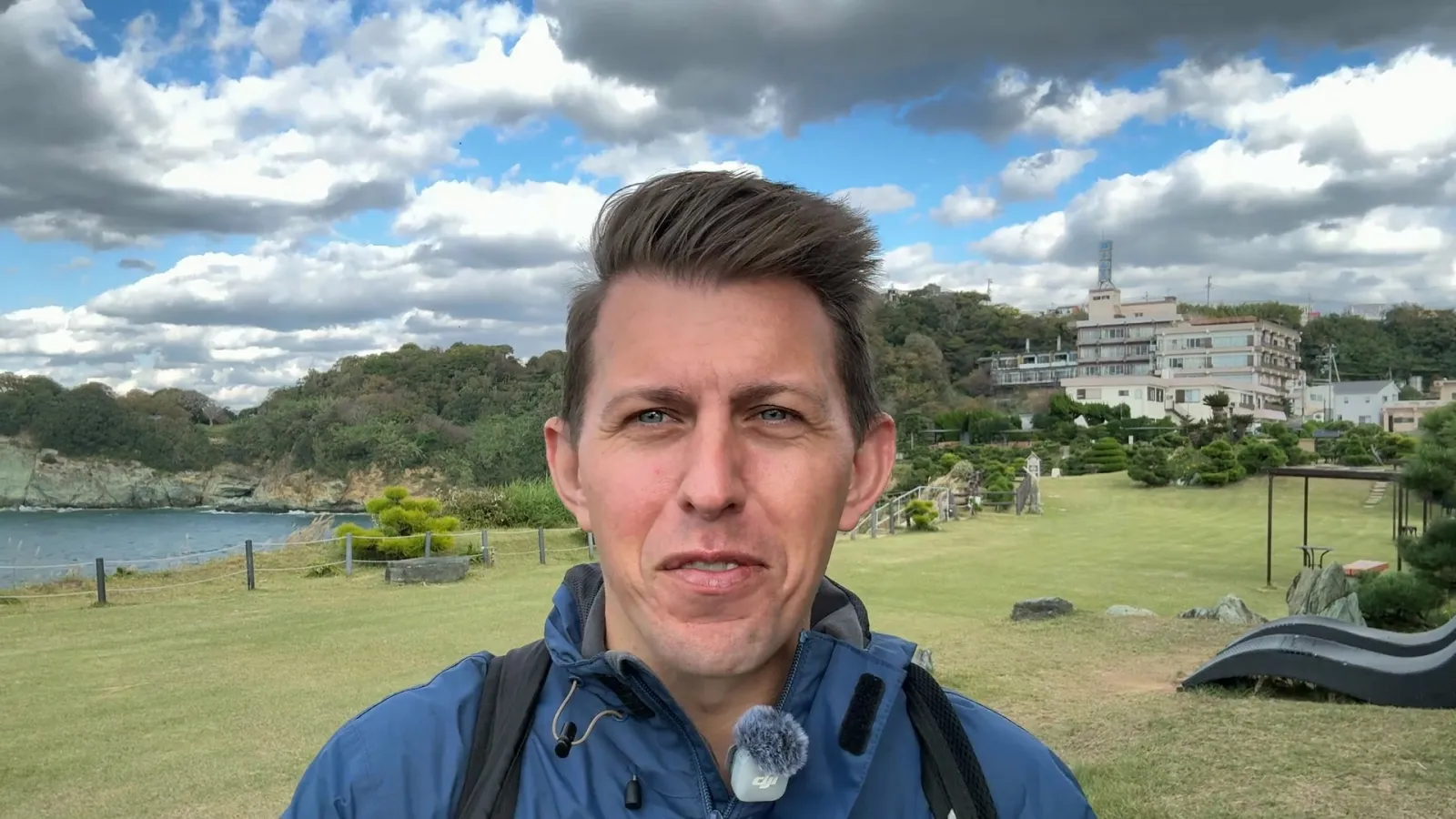
Greetings from Bandokoro Garden! I’m south of Wakayama in Japan right now, and I had no plans to be here today. Yet here I am in this beautiful seaside garden. In the online description, they call this the Amalfi of Japan. So many places compare themselves to Amalfi, but this place really is beautiful.
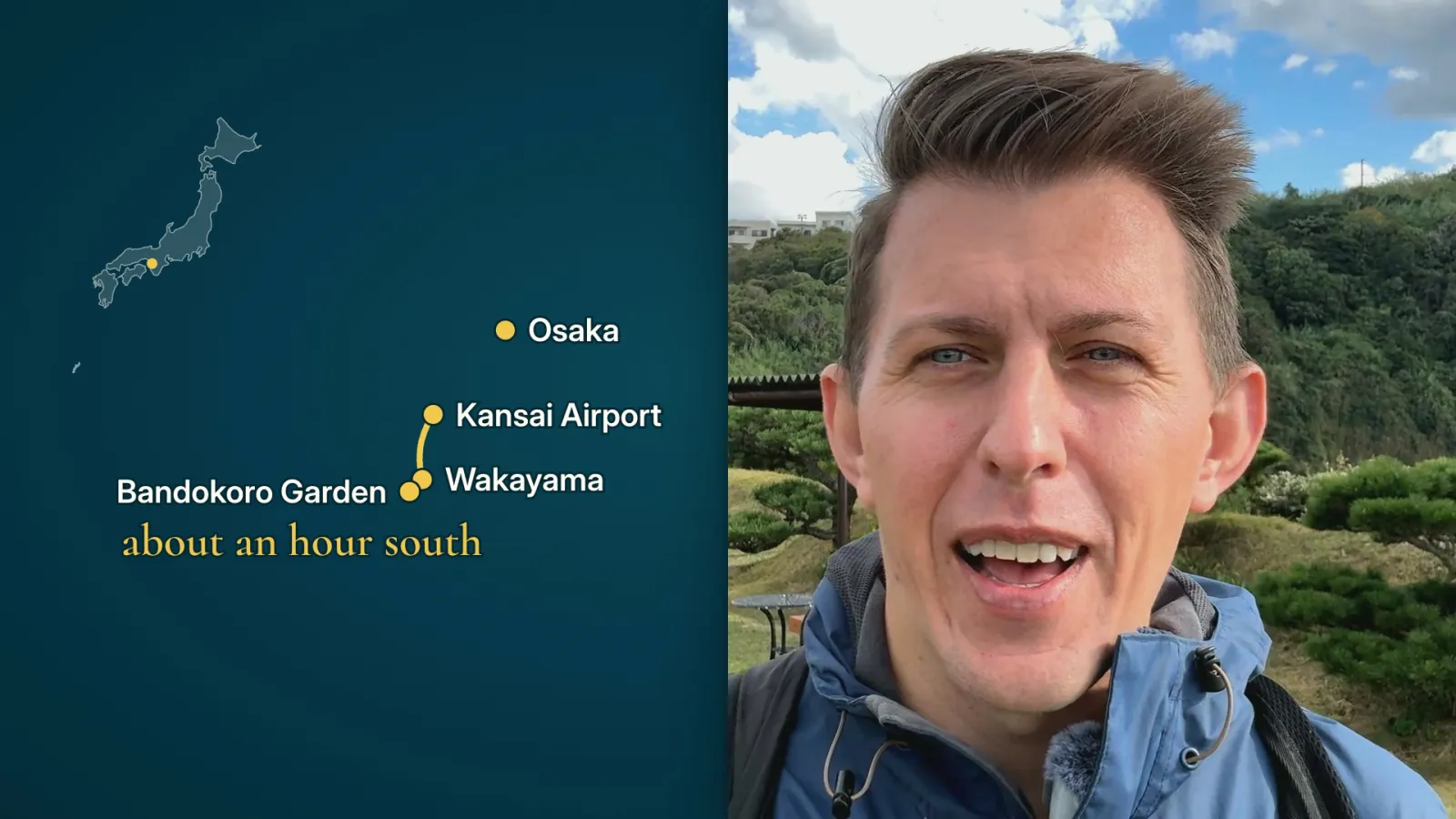
When I landed at Kansai Airport in Osaka yesterday, I didn’t have a destination. I started looking on my phone for local areas, and I saw Wakayama was about an hour south. I booked a hotel, and from there I found this place.
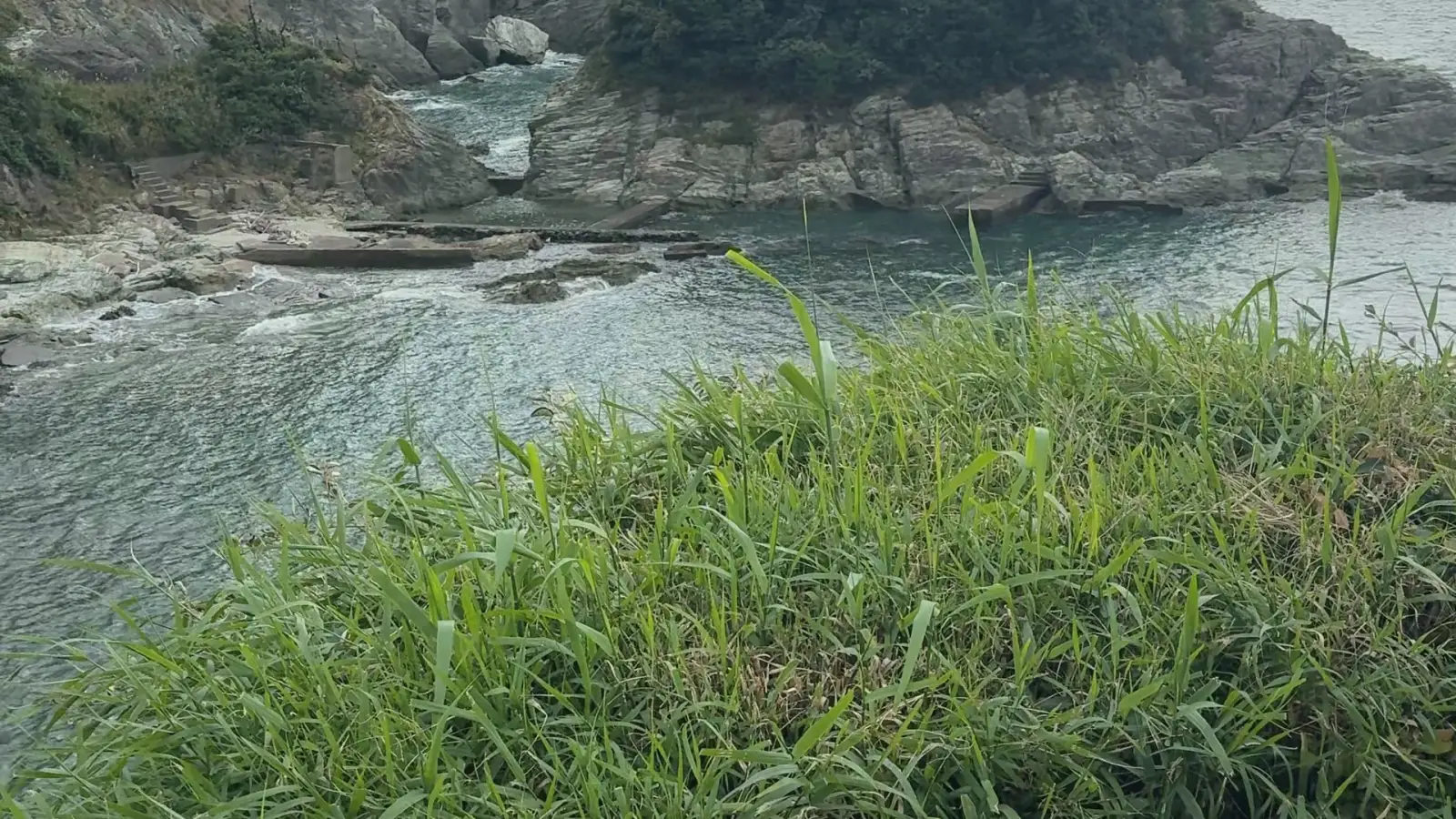
This morning I woke up and went and got coffee. I ended up at Starbucks, mostly because nothing else was open early in the morning, so I’ll settle for the convenient, familiar American coffee. I just decided, okay, let’s go somewhere, let’s check it out, and somehow I ended up here. There’s like no one here.
The pathless wander
This is part of a practice I like to encourage people to embrace, which is called the wander. I call it the pathless wander. It has three simple steps.
-
Head out without a destination
You head out of where you are, and you can't have a destination. Almost everyone has a destination and knows how to get there with mobile phones and Google Maps. One to two hours, maybe more if you have more time. Biking works too, just at a comfortable pace.
-
Follow your belly button
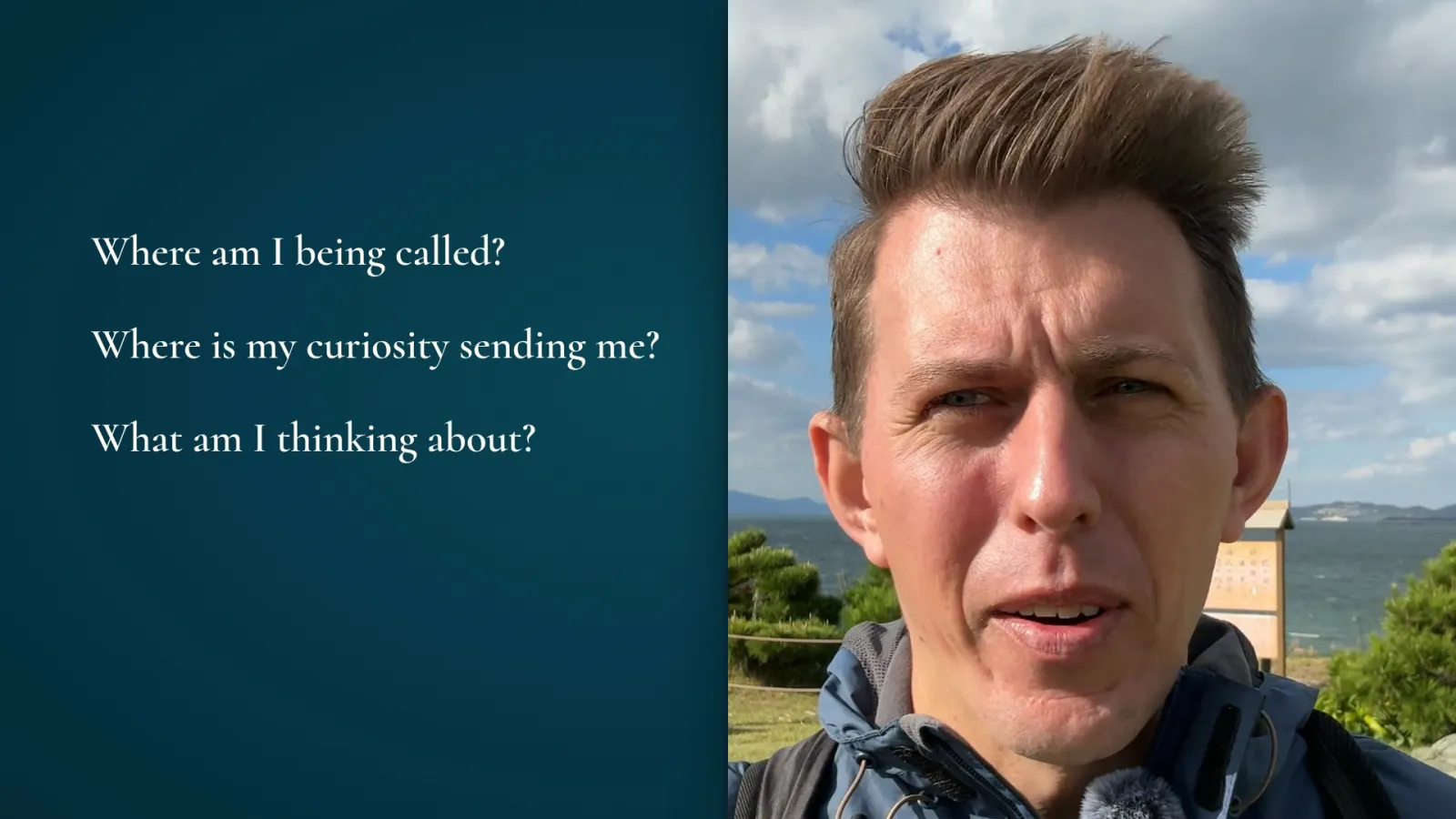
This is from my friend Dom Francks, and it's a way to really connect with your intuition and a less heady space, trying to see where it makes sense to go. Where am I being called? Where is my curiosity sending me? What am I thinking about? Try to make in-the-moment decisions about what to do next. You can go for a walk, you can jump in a cab, pick a random place like I did, and just see what emerges.
-
Note what comes up
You're just trying to be with yourself. You're trying to note what comes up. Is there discomfort that comes up? It's often very uncomfortable for people, and you're just paying attention to that, and there's nothing else to do.
I think in today’s world we’re so rushed. There are so many things going on. We put so much pressure on ourselves to be impressive, do so many things, and we don’t have space to slow down and think and wander.
Wandering in the wilderness
Dom, one of my podcast guests, is an experienced wilderness guide. As part of his training with the Animas Valley Institute, he did a number of what they called “wanders.”
As he recounted, a wander is “moving through a wild or wildish place without a clear destination, being guided by your intuition, but also with a sense of like some sort of orientation you want to have towards the world around you, or ceremony you want to enact.”
Dom: So this is not a hike. This isn't like, I'm going to get to the top of that mountain and then come back down. This is like, I'm going to walk and allow myself to be guided by my belly button. And allow myself to be guided by the intuition of where I want to go, but walk as if all the other beings and creatures around you are aware of you and happy that you're there. And just try that on for a couple of hours as you allow yourself to move exactly the way that you want to move through a park, through the national forest nearby, wherever it is. And that is an amazing way of opening your perceptions.
I don't know if it's necessarily leisure in the way that you're talking about it, but I found like just simple practices like that. Like I had spent a lot of time hiking and trying really hard and rock climbing and skiing, and I still love those things. And wandering was a totally new thing for me and it was life-changing.
Paul: That's so funny. When people ask, how can I improve my relationship to work? I actually start with, I say, go two hours, wander somewhere without a destination. And people are sort of shocked at that. But the whole point of that is basically just to sort of, yeah, you just loosen into yourself a little more and it's all about just getting to know yourself.
Wandering was a practice I embraced after quitting my job, although my wanders were often in the flat streets of Taipei or Boston. I would set out into the street without a plan or destination and just take it step by step. If I found myself trying to create a plan, I would notice it and keep walking. If I saw something that looked interesting, I might change direction and see where things take me. If I saw food that looked good, I might sit down and eat.
In my first month of living in Taiwan, I didn’t have any work to do, so I sort of had to wander and just be in this new environment. I experienced a radical shift in my state of being from walking around without a plan, and that state convinced me to continue to cultivate that feeling and build a life around it.
My leisure practice
This is also part of my leisure practice. For me, a leisure practice has been indispensable. It is the mode of life in which I am able to slow down and see more possibility while also being able to embrace the inherent uncertainty of life.
There were a couple phases of that.
-
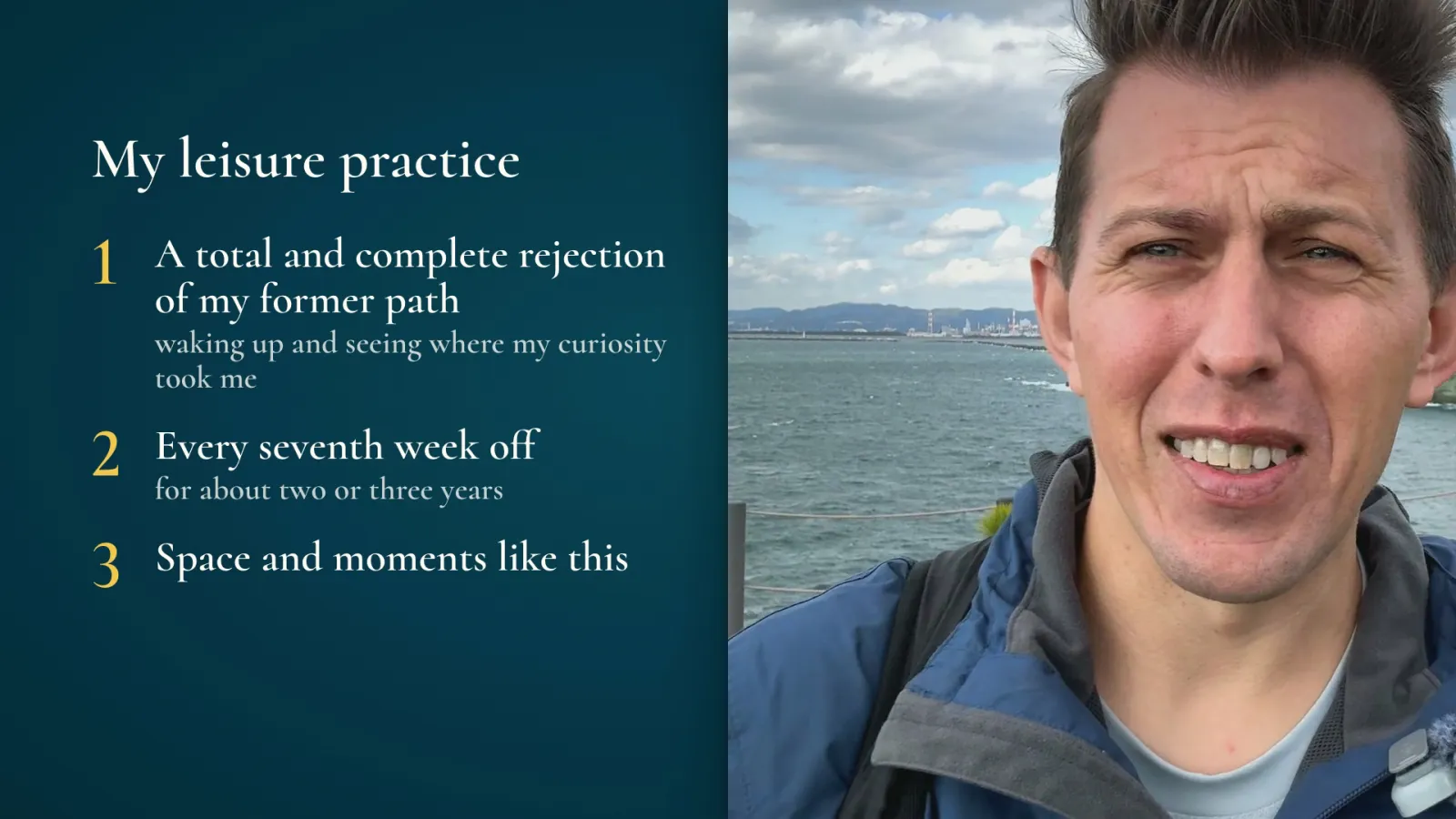
In the first couple of years, it was a total and complete rejection of my former path, which was the default path: constant achieving, constant busyness and everything. All I did was spend as many days as possible waking up and seeing where my thoughts, my mind, my curiosity took me.
What I discovered is that I still wanted to do a lot of things. I wanted to write, I wanted to create, I wanted to connect with friends, I wanted to go see the world. That really helped me recover from the confusion and bewildering overwhelm that comes after you leave the default path.
-
The second phase, after I got busier and had all these projects I wanted to work on, was taking every seventh week off. I did this for about two or three years, and that was an attempt to escape some of the constant hum of admin and busyness that can emerge once you're working on all these diverse projects.
So last week I had no plan. Nothing on the calendar. No work to do. I wake up and wander and see where the day takes me. On Monday I left on a bike and ended up at a cliff overlooking Austin. It was beautiful and I was once again reminded that our world is beautiful. On the way back I decided to grab a coffee and sit outside staring at the river for a while. It was nice.
One of those weeks off, from my newsletter in May 2022. -
Phase three, since I had kids, has been trying to find space and moments like this. And so I'm here for a few days trying to do that, trying to go a little slower.
I missed the bus by like an hour
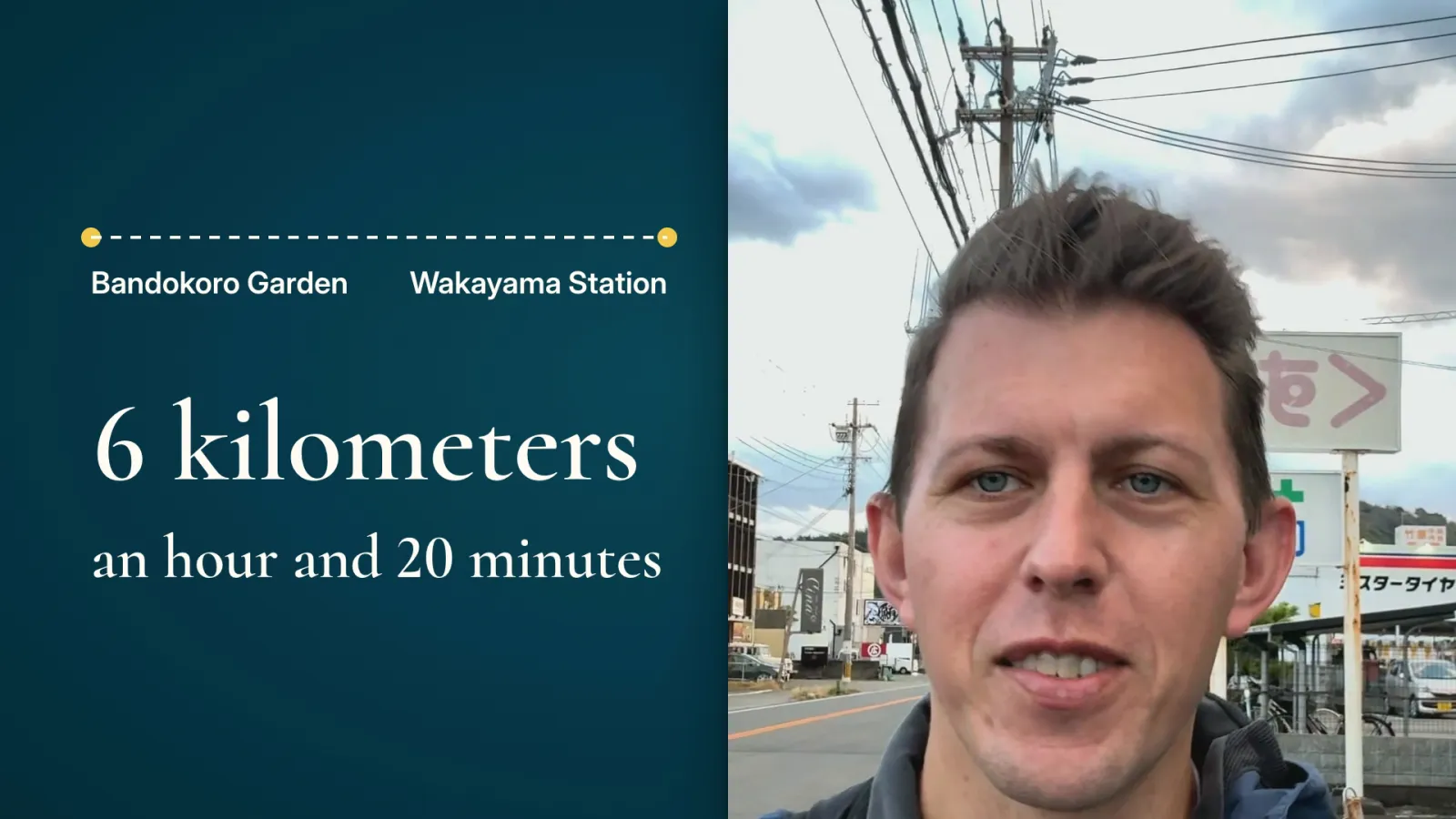
I’m leaving the garden now, and I’m headed to Wakayama, back to the train station. I’m going to Kyoto to meet a friend. I took a cab to the garden, but I decided not to do a cab on the way back, just felt like doing public transport, and that failed. I missed the bus by like an hour, so I decided I’m just gonna walk back. It’s like six kilometers, and it looks like it’s about an hour and 20 minutes.
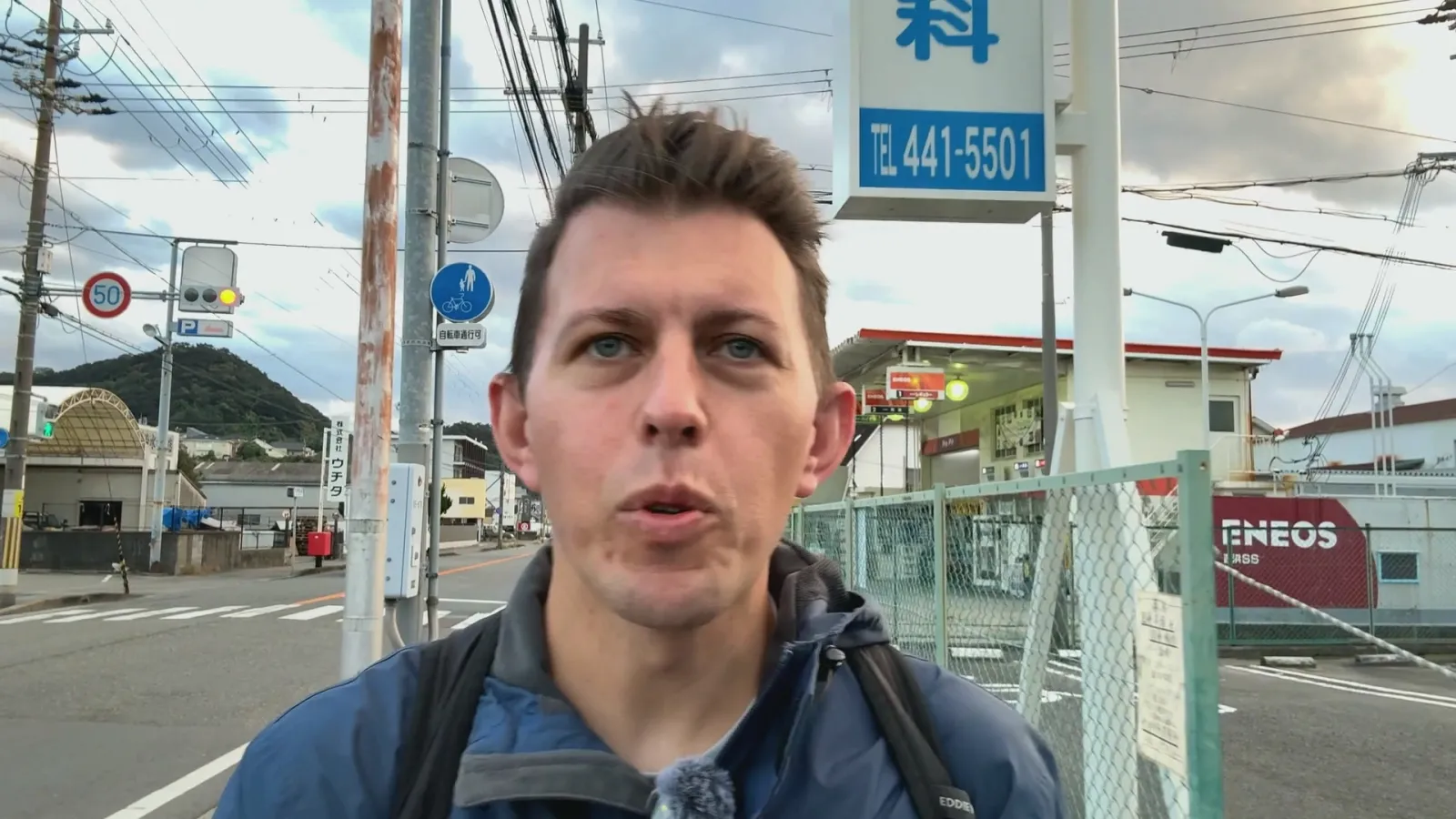
There are not many tourists in this area. I seem to be one of the very few. So I’ll keep wandering and see what I see.
I think one thing I like about going to a random area is that even this is probably the equivalent of a suburb for Japan, but for me it’s just so different. It’s definitely very similar to Taiwan, where I live. You have these dense mini cities, very accessible, very walkable, but just nothing like this in the US.
The point of the wander
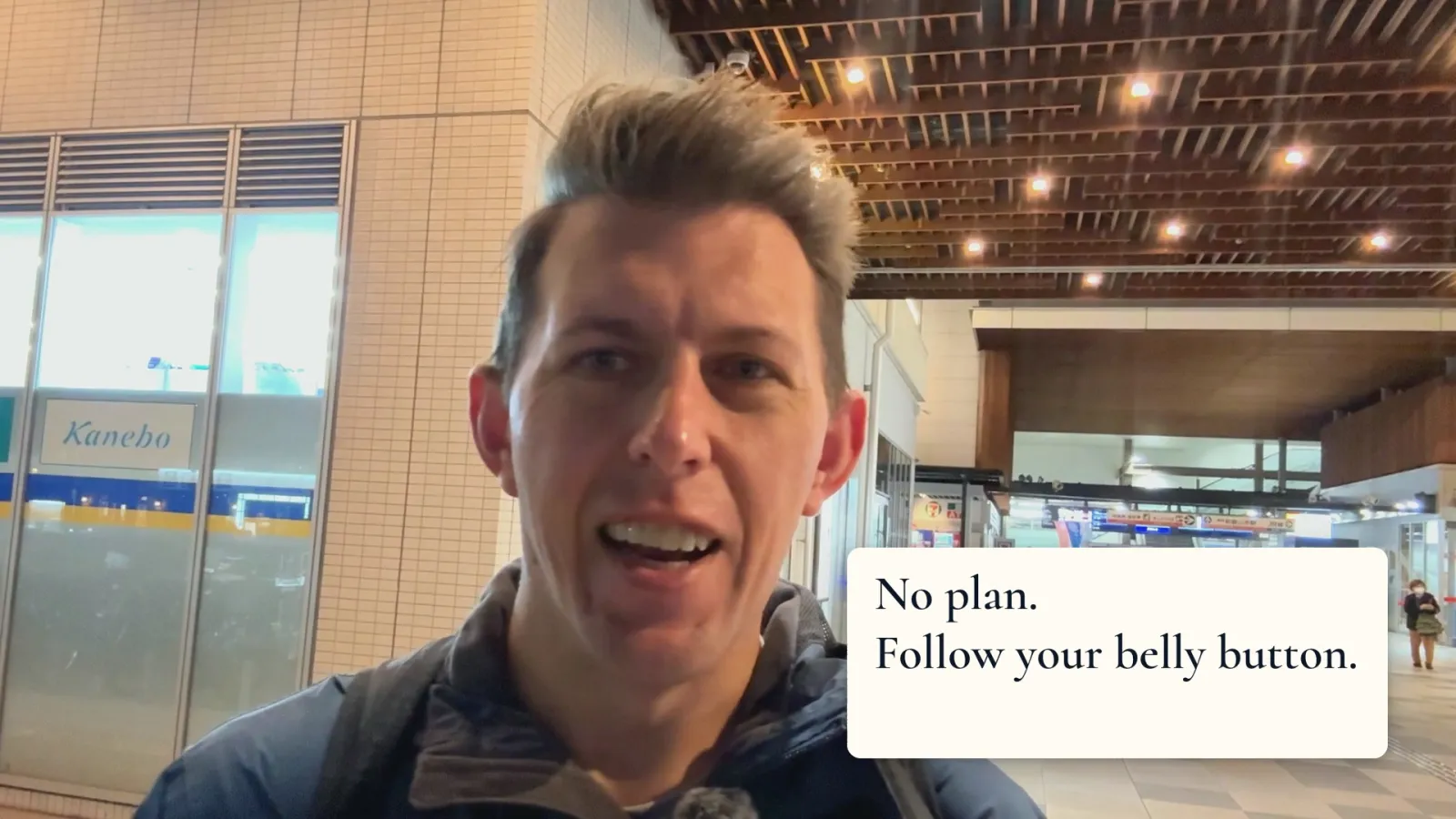
So I made it back to the station. I think the best thing about doing these days where there’s no plan is that there’s this expansive feeling, like you’re not in a rush for an entire day, and so it feels very calm and relaxed. For example, if I said, okay, I have to catch this bus at a certain time, there’s sort of a cost to that: you’re already thinking about it as it’s approaching, and it’s hard to escape that.
That’s why I love it, and I encourage you to try it: go wander, no plan, follow your belly button, and see what emerges on that day.
The Pathless Path Workbook
A 10-Week Journey for Reimagining Work and Life, with the pathless wander as its weekly practice. A work in progress. Join the waiting list to hear when it's ready.