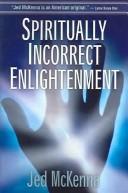
What I think
The beginning of this book is so good. He re-publishes an extremely critical letter from a hater (fan). It makes you realize that if you like someone’s writing, a good critic actually just makes you like them more.
What the book is about
The second book in McKenna’s Enlightenment Trilogy picks up where Spiritual Enlightenment: The Damnedest Thing left off. It opens with a furious letter from a reader of the first book, then follows Jed through more conversations with seekers, taking apart what most spiritual teaching promises and asking what people actually want.
The letter
The book opens with a letter from a reader of the first book, printed by permission with her name withheld. She asked him to put it at the front of his next book, and he did. Here’s how it goes:
Dear Mr. McKenna,
I finished reading your book Spiritual Enlightenment: The Damnedest Thing and I'm so mad, I could chew nails. While you tout your book by its very title as a spiritual book, it is nothing about spirituality and was very disturbing to boot. I wish I'd never read it but believe me, if you write another book, I'll not be buying it.
Do you realize that if people do as you suggest that their lives would be ruined? Maybe you never had anything to lose, but most people do. It's like some fairy tale world you live in, where you think everyone is independently wealthy and are able to come and go without commitments to an employer, to say nothing of family, friends, and community. Like you think a mother can leave her children to go off on this spiritual pursuit or wild goose chase, I'd call it. Who would do that? What for? Who would want to? Not realistic, not happening at all.
I have responsibilities to my family, friends and my community. I do volunteer work at a local shelter and organize food drives for the poor in my community. I am a member of the women's guild of our church. I help my children with their homework, provide good meals and a clean, happy home. They have extracurricular activities like dance, soccer, music lessons that enrich their spirit. You expect me to drop everything I value in my life, things that give meaning to my life. It would be flushing everything I value down the toilet. Real lives are at stake here and you talk as though it's nothing more than a stage. Get real. What you call enlightenment, I call a horrendous nightmare.
I can't imagine how or why you say such things. Just to sell books? Even if the things you say are true, who cares? What's so great about Truth? I'd rather have my family and my life where I believe real spirituality is available to each and every one of us through kindness, good will, an open heart and mind. What would you know of that with your nihilism and your void? I think it's rich that someone would write a book about spiritual enlightenment who admits they don't even know what the word spiritual means.
So, maybe you will sell a lot of books. I don't know why anyone would accept your version of spirituality. It's the opposite of everything that's good and beautiful about life. It is opposite of love and God and family and yet what's it all for? There's no point. Even you yourself say that there's no point. Yet you advocate to your readership that they put all else aside to become, in essence, total failures. The damage I would do to other's lives would be irrevocable, they would hate me and for what? Absolutely nothing.
Judging from all the rosy testimonials in the front of your book, there are people out there who believe you are a great spiritual master. I don't think you have a spiritual bone in your body. I've had the wonderful privilege of being in the presence of individuals who were truly enlightened but you are nothing like them. Put that in the front of your next book so people like me won't waste their time.
Name withheld by request.
Seattle, Washington
I love this letter because I really like Jed McKenna’s writing, and it makes you realize that a good critic actually just makes you like someone’s work more. It reminds me of an idea from Visakan Veerasamy: haters are fans too.
Highlights
Nothing to do
I should mention one of the more peculiar things about it, which is that I have nothing to do. I don’t have any challenges left, and I can’t just make one up.
I have no framework within which anything is better than anything else, so what I do doesn’t particularly matter. I have no ambition, nowhere to go, no one to be or become. I don’t need to distract myself from anything or convince myself of anything.
What seekers actually want
There are really only three possible destinations; human adulthood, truth-realization, and altered states of consciousness.
My advice to anyone who wants to know the truth is to come and get it, but few who venerate truth conceptually are game for the reality of it. The vast majority of spiritual seekers want sweet dreams, not the annihilation of the dreamstate.
If I could have only Lao Tzu or Thoreau, I’d take Thoreau. If I could have only Rumi or Whitman, I’d take Whitman. If I could have only the Mahabharata or Moby-Dick, I’d take Moby-Dick.
Grown-up human beings
most adults are just children who don’t know they’re children, unwittingly perpetuating an endless cycle of complacent mediocrity.
We hope that our children might grow up to be president, or a rich doctor or a powerful lawyer, as if that were any sort of success. Rather, we should hope that they grow up to be grown-up human beings, and redefine our notions of success accordingly.
Desire and fire
Desire and the manifestation of desire isn’t a crapshoot. It’s an art and a science and it’s something you can pay attention to and learn about and get better at, but it’s not something you can dictate.
What do you really want? If you’ve got the kids and the house and the cars and the career, or any sort of life you’re fond of, and you’re looking at the subjects discussed here as a way to spiritually enhance your existing lifestyle, then I should remind you that dreams are highly flammable things
Just be and breathe
that you can just be and breathe and set everything down for a while, appreciate what you are and what you’re a part of, and then, when you pick everything back up, you’ll understand it better, appreciate it more, know it beneath the surface.